Queer Places:
University of Cambridge, 4 Mill Ln, Cambridge CB2 1RZ
Greenacres Cemetery, Greenacres Rd, Greenacres, Oldham OL4 3HT, United Kingdom
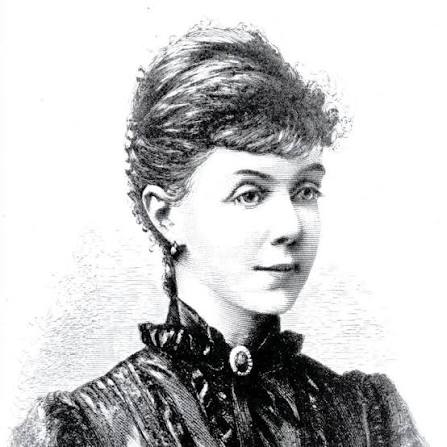 Mary Higgs (February 2, 1854 – March 19, 1937) was a pioneering British social reformer, author, and academic who made contributions to women's housing rights, urban
planning, and vagrancy reform. She was the first woman to sit the Natural Sciences Tripos examination at the University of Cambridge.
Mary Higgs (February 2, 1854 – March 19, 1937) was a pioneering British social reformer, author, and academic who made contributions to women's housing rights, urban
planning, and vagrancy reform. She was the first woman to sit the Natural Sciences Tripos examination at the University of Cambridge.
Born Mary Ann Kingsland on February 2, 1854, in Devizes, Wiltshire, to Caroline and William Kingsland, a Congregational minister.
In 1871, she entered Hitchin College for Women, which soon transferred to Cambridge to become Girton College. In 1874, she became the first woman to take the Natural
Sciences Tripos at Cambridge.
After completing her studies, she worked as an assistant lecturer at Girton before teaching mathematics and science at Bradford Girls' Grammar School.
In 1879, she married Reverend Thomas Kilpin Higgs, a Congregational minister. They had four children together.
The family relocated to Oldham, Lancashire, in 1891, where her husband led the Greenacres Congregational Church.
Witnessing severe economic distress and cotton trade lockouts, Mary began visiting workhouses and organizing welfare initiatives for impoverished local women.
To investigate the unsafe and unsanitary conditions faced by homeless women, Mary dressed as a vagrant and went undercover into workhouse casual wards and unregulated
lodging houses starting in 1903.
Key Writings: Five Days and Five Nights as a Tramp Among Tramps (1904, originally published anonymously). Glimpses Into the Abyss (1906). Where Shall She Live? (1910,
co-authored with Edward Heyward).
She co-founded the National Association of Women's Lodging Houses (NAWLH). Inspired by Ebenezer Howard's garden city movement, she established the Beautiful Oldham
Society in 1902 and spearheaded the development of Oldham’s Garden Suburb in 1909.
She was also a driving force behind translating the New Testament into modern English (Twentieth Century New Testament).
Mary was awarded an Officer of the Order of the British Empire (OBE) in 1937 for her social work. She passed away shortly thereafter on March 19, 1937, at age 83.
While Mary Higgs was married to a man and operated within a Christian reform framework, her life, work, and social environment intersect with LGBTQ+ and Queer Studies in
several significant ways:
After the death of her husband in 1907, Mary Higgs relied on close female social networks. Prominent female philanthropists Dame
Sarah Anne Lees and her daughter Marjory Lees provided Mary with housing at
Bent House in Oldham (demolished in 1962), which became a base for women's welfare campaigns. Queer historians examine these early 20th-century homosocial spaces—where financially independent,
single, or widowed women lived together and led political reforms—as vital precursors to modern feminist and lesbian community-building.
Mary Higgs’s decision to disguise herself in tattered clothing to navigate streets, casual wards, and common lodging houses required a deliberate subversion of Victorian
female dress standards and decorum. In gender and performance studies, her undercover "slumming" is analyzed as an early form of gender-nonconforming social investigation
that broke open restricted female spheres.
In seminal works of queer urban history—such as Seth Koven’s Slumming: Sexual and Social Politics in Victorian London—investigative social work, cross-class charity, and
lodgings reform are analyzed through the lens of non-normative intimacy, bodily boundary-crossing, and same-sex homosocial desire. Scholars examine how middle-class
investigators like Higgs entered all-female casual wards and lodging houses, documenting the physical intimacy, vulnerability, and alternative domestic structures of
working-class women living outside traditional heterosexual family units.
References:
Other references:
- Higgs, Mary. Glimpses Into the Abyss (1906). This book chronicles her undercover investigations into the squalid and dangerous conditions of casual wards and lodging houses, exposing the vulnerabilities of destitute women.
- Higgs, Mary. Five Days and Five Nights as a Tramp Among Tramps (1904). Her first-hand account of adopting the dress of a vagrant to experience poverty from the inside.
- Higgs, Mary, and Heyward, Edward. Where Shall She Live? (1910). A foundational text emphasizing the urgent need for better, safer lodgings specifically for women.
- The Oxford Dictionary of National Biography (ODNB). The entry on Mary Ann Higgs (née Kingsland) by Rosemary Chadwick provides a comprehensive overview of her education at Girton College, her marriage, and her philanthropic legacy in Oldham.
- Historic England. Biographical records detailing her status as the first woman to take the Natural Sciences Tripos at Cambridge, and her later campaigns for working-class women's housing.
- Spartacus Educational Archives. Contains detailed historical summaries of her founding of the Beautiful Oldham Society, her workhouse visits, and her homosocial reform networks operating out of Bent House.
- Koven, Seth. Slumming: Sexual and Social Politics in Victorian London (Princeton University Press, 2004). This is the seminal text linking Victorian/Edwardian cross-class social investigation to non-normative sexualities, bodily boundary-crossing, and same-sex homosocial desire.
- Vicinus, Martha. Independent Women: Work and Community for Single Women, 1850-1920 (Virago, 1985). While not exclusively about Higgs, this foundational text in queer and feminist historiography explores the homosocial communities, female-led settlement houses, and intense female friendships that empowered reformers during this era.
Support this project
This website is a passion project researched, developed, and funded entirely by me. If you find the content valuable and would like to help support the ongoing research and hosting costs, any contribution is deeply appreciated.
Thank you for keeping this independent resource alive!
My books on Amazon: Elisa Rolle's books
BACK TO HOME PAGE